Cloth That Keeps Its Counsel: Dressing for Oxford’s Silent Rooms
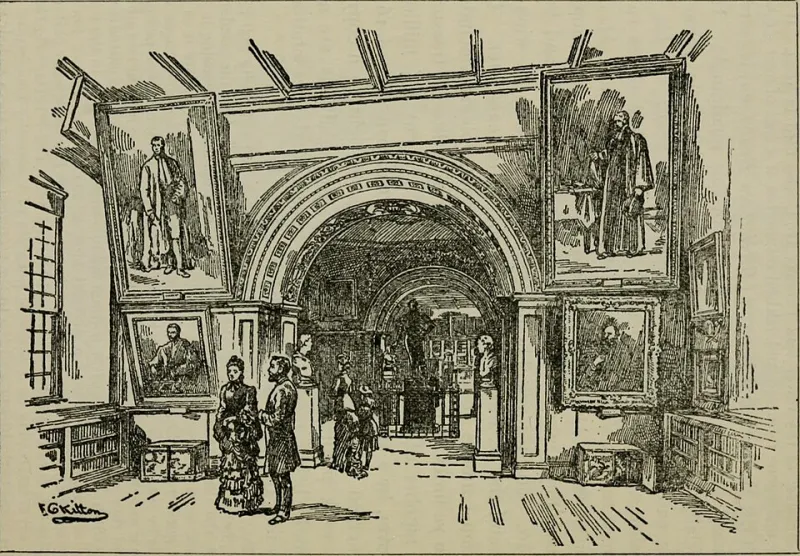
Photo: Internet Archive Book Images, No restrictions, via Wikimedia Commons
There is a particular sound that belongs to Oxford’s quieter rooms, and it is not the turning of a page. It is the faint, needless percussion of a coat sleeve against a chair, the zip of a bag pulled too quickly, the synthetic whisper of a lining that announces a late arrival to an entire reading room. In a city that has made an art of hushed attention, the way cloth moves is a matter of manners. The no-rustle rule is not a rule of silence for its own sake. It is a rule of consideration.
The Acoustics of Attention
The Bodleian’s reading rooms impose their own discipline. Under the painted beams of Duke Humfrey’s, or at a long table in the Lower Reading Room, the ear becomes unusually alert. A bench scraped back, a Velcro strap opened, a waterproof shell folded in haste: each carries further than the wearer expects. The same is true in the Sheldonian on a cold evening, or in the Holywell Music Room before a recital begins. When a violinist is settling into a phrase, the audience’s obligation is not merely to sit still but to sit quietly in every sense.
This is where wardrobe decisions made at home become public. Most of us audit our clothes for colour, fit and weather. Fewer of us audit them for sound. Yet the quietest rooms in Oxford are precisely where the difference between a considered cloth and a noisy one is most exposed.
A Taxonomy of Cloth and Sound
Wool is the natural ally. A closely woven worsted, whether in a jacket or a pair of trousers, moves with a soft brush rather than a swish. It absorbs sound rather than throwing it back. Flannel is quieter still, its brushed surface muffling movement; a grey flannel trouser under a table is almost inaudible. The caveat is weight. A very dry, lightweight flannel can crackle faintly with static in centrally heated rooms, though the effect is minor compared with synthetic shells.
Corduroy is a more complicated companion. Its corded surface gives it character, but wider wales can produce a distinct rasp as the leg brushes past a chair. Fine-wale corduroy, in a muted tone and a relaxed cut, is the more discreet choice for libraries and evening recitals. It is not silent, but it is civilised.
Silk is a question of layers. A silk scarf or lining feels luxurious, yet the fabric can produce a high, papery rustle when disturbed. Worn close to the body and secured neatly, it is seldom a problem. Worn loose under a coat, it becomes a small announcement. In recital halls, where movement is minimal, silk is rarely the offender; in reading rooms, where notebooks and bags are shifted, it can be.
Synthetic blends deserve the most scrutiny. Waterproof shells, nylon linings and technical trousers have their place in an Oxford winter, particularly on wet stone. But they are acoustically intrusive. A shell jacket removed in a quiet room can sound like unwrapping a parcel. If the weather demands such a layer, wear it over a quiet wool jacket and remove it before entering the building, rather than in the doorway of the reading room.
The Cut Matters as Much as the Fibre
A quiet fabric can still make noise if it is cut too generously or too tightly. Excess fabric brushes against itself; tight fabric strains at seams and produces a faint creak when the wearer sits. The middle path is best: enough ease to move without contact, enough structure to remain composed. Sleeves that end cleanly at the wrist, trousers with a modest break, and jackets that do not billow when turned will always be quieter than more dramatic shapes.
Fastenings matter too. Metal zips, press studs and rigid buckles all have a voice. For the library or the recital hall, buttons are preferable. A simple leather strap or a fabric tie on a bag is quieter than a chain. A soft case for glasses or a pen is quieter than a hard one. These are small decisions, but they accumulate.
A Checklist for Quiet Dressing
Before an afternoon in the Bodleian or an evening at a winter concert, consider the following. Choose wool, fine-wale corduroy or flannel for the main garment. Avoid loose silk and synthetic shells in the room itself. Prefer buttons to zips where possible. Carry a soft bag, and pack it before entering rather than in the doorway. Wear sleeves that do not brush the table. Sit once, deliberately, before the room fills, so that any necessary adjustment is made early. And keep a scarf folded neatly rather than trailing.
None of this requires a separate wardrobe. It requires a moment’s thought about how clothes behave, not only how they look. In Oxford, restraint is often described in visual terms: muted colours, clean lines, nothing overstated. But restraint is also acoustic. The most refined outfit in a reading room is the one that lets the room remain itself.
Dressing quietly is not an affectation. It is a form of respect for the people around you, and for the places that ask for stillness. In a city of libraries and recital halls, that respect is always in season.