Reading the Label: Wool, Cashmere and the Blends That Earn Their Place
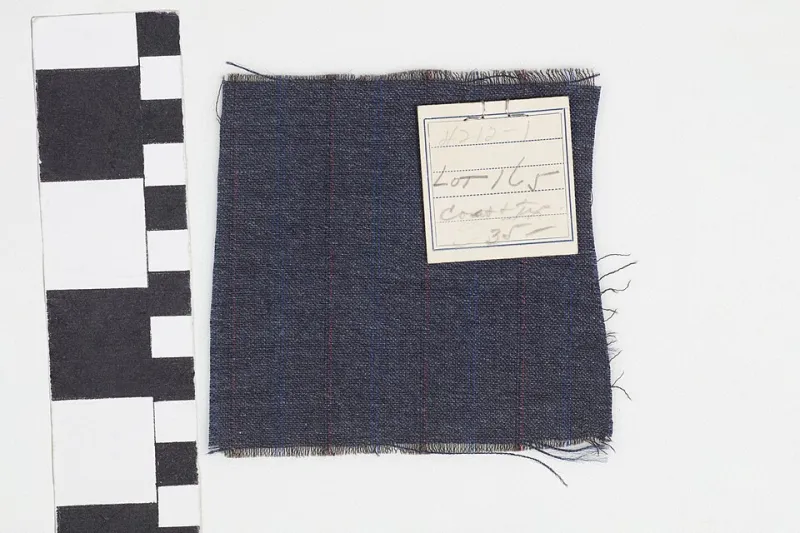
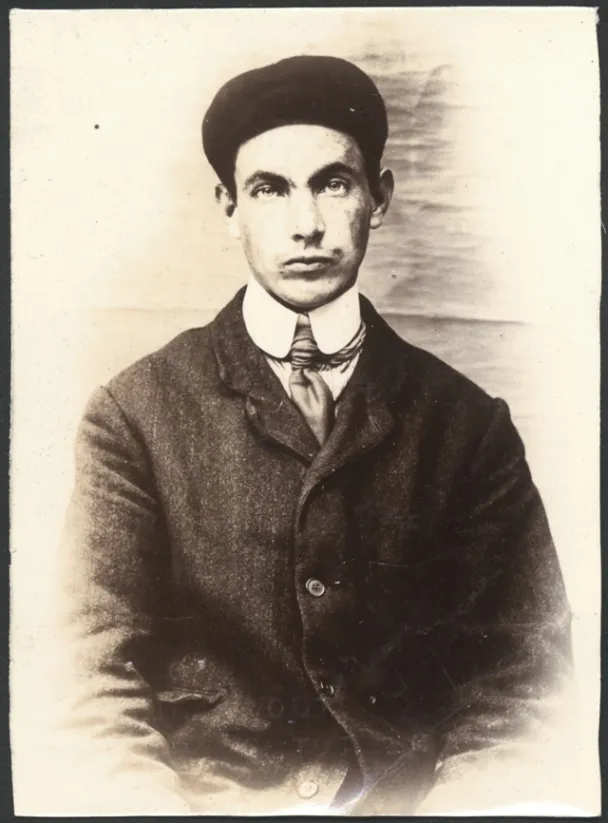
Photo: Rogers Peet Company, No restrictions, via Wikimedia Commons
The label inside a coat is the least-read document in menswear. It is small, it is sewn in an awkward place, and it is written in a language of percentages and fibre names that most shoppers have learned to skim. Yet almost every judgement about warmth, drape and longevity is answered there, if one knows how to read it.
The Percentage Trap
A tag reading eighty per cent wool and twenty per cent polyamide is not a lesser garment than one reading one hundred per cent wool. It may be a better one. The headline percentage describes quantity, not quality, and the character of a cloth is determined by the fibre's fineness, its staple length, the twist of the yarn and the density of the weave.
A 100 per cent wool jacket in a loosely woven, short-staple yarn will pill, bag at the elbow and lose its shape within two seasons. A wool-and-nylon blend in a tightly woven covert will outlast it comfortably. The percentage is the beginning of the question, never the answer.
Wool Is a Category, Not a Fibre
The word wool on a label can describe anything from coarse carpet-grade fibre to a yarn fine enough to sit against the skin. What matters is the specification behind it, which is usually implied by the breed or the word attached to it.
Lambswool comes from the first clip of a young sheep. It is soft, springy and slightly shorter in staple than adult wool, which makes it excellent for knitwear and less suited to hard-wearing tailoring. Merino is finer still, naturally temperature-regulating and comfortable next to the skin; it is the right choice for base layers and fine-gauge knits, though it is less abrasion-resistant than coarser fibres and will wear at the cuff.
Shetland wool is the quiet workhorse of a British winter wardrobe. Slightly coarse, hard-wearing, with a halo of surface fibre that traps warmth. It is not the softest thing you will own and it is among the most useful.
Cashmere and Its Dilutions
Cashmere is the fine undercoat of the cashmere goat, and its reputation has made it a marketing word rather than a specification. A good cashmere sweater is light, warm and improves with careful wear. A poor one is soft in the shop and balding by February.
The distinguishing factor is staple length. Short fibres pill and shed; long fibres hold. Since the label rarely tells you, use your hands: squeeze the knit and release it. A good cashmere springs back immediately. Rub the surface gently with the flat of your thumb; if loose fibres lift at once, the yarn is short. Hold it to the light and look for the density of the knit — a thin, gappy knit will not survive a winter regardless of the fibre content.
A cashmere blend containing a proportion of silk will drape more crisply; one with a small amount of nylon will wear longer at the elbows. Neither is a compromise if the garment is honest about what it is.
Tweed, and the Case for Coarse
Tweed is a family of cloths rather than a single one, defined by a rough, tightly woven woollen yarn — Harris, Donegal, saxony, cheviot. Its virtues are weather resistance, pattern and longevity, and its drawback is that it does not forgive a poor fit. Tweed holds a shape, so a badly cut tweed jacket looks worse than a badly cut worsted one.
For an Oxford winter, a mid-weight tweed of around 350 to 420 grams is the practical choice: warm enough for a cold platform, not so heavy that it cannot be worn indoors. Check the finish by looking across the surface at an angle; a good tweed has a slight, even hairiness rather than a uniform fuzz.
Blends That Are Quietly Useful
Certain combinations do specific jobs better than pure fibre.
Wool with a small percentage of polyamide strengthens the yarn at the wear points and is standard in hard-wearing trousers and socks. Wool with silk adds drape and a low sheen, useful in evening cloth. Lambswool with a little viscose softens the hand and reduces cost without destroying the warmth. Cashmere with merino produces a knit that is affordable and reasonably durable, provided the knit density is good.
What to treat with caution is a very high synthetic percentage presented as a wool garment. If the tag reads sixty per cent polyester and forty per cent wool, you are buying a synthetic cloth with a wool accent, and it will behave accordingly: warm in the shop, clammy after an hour, and prone to shine at the seat.
Three Tests Before You Pay
First, the recovery test. Screw a corner of the cloth in your fist for five seconds and release. A good wool returns to its shape; a poor one stays creased.
Second, the density test. Hold the fabric to a bright window. If light passes through easily, the cloth is loosely woven and will not block wind. This matters more than weight.
Third, the surface test. Run your palm lightly across the cloth in both directions. A well-finished wool feels smooth in one direction and very slightly rough in the other. Uniform slickness usually means a heavy pressing or a high synthetic content.
Where the Money Should Go
Spend on the outside layer and on knitwear, and economise on the layers nobody sees. A coat is judged by its cloth every day it is worn, and a good one amortises over a decade. A lambswool or Shetland sweater at a moderate price, well cared for, will outlast three cheap ones. Shirts and underlayers can be plainer, because their job is to be clean and quiet rather than remarkable.
Read the label, then put your hands on the cloth. The tag will tell you what a garment claims to be. Only the cloth will tell you what it is.