Composure Under Invigilation: Dressing for December Assessments

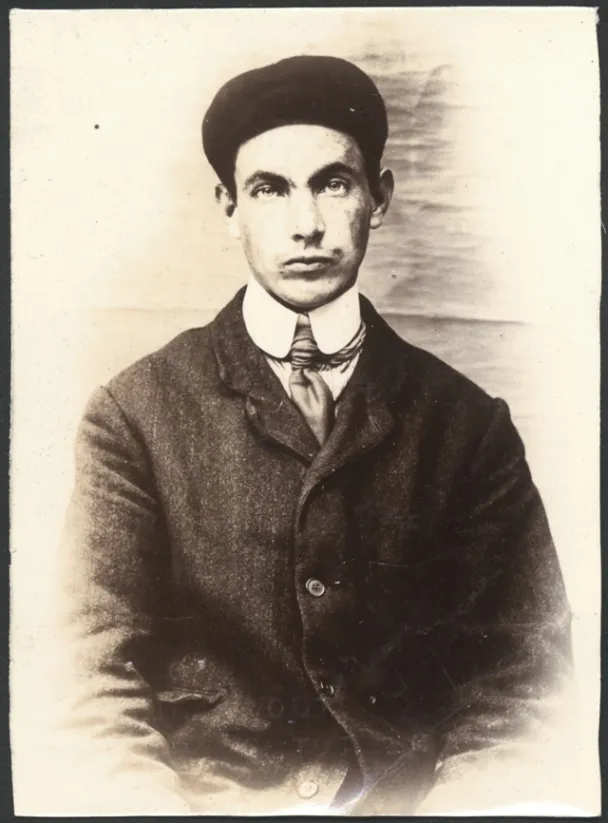
Photo: Onwuka Glory, CC0, via Wikimedia Commons
There is a particular kind of winter morning in Oxford when the examination hall is cold at nine and stifling by eleven, when the walk there is wet and the room itself is dry, and when the only thing anyone remembers afterwards is whether they were comfortable enough to think. Assessment dressing is not a matter of style in the decorative sense. It is a matter of removing friction, quietly and in advance.
Where formal examination dress is prescribed, the question is settled, and settled well — the discipline of a required uniform relieves the candidate of a decision. What follows concerns the other days: the long assessments, the collections, the practicals, the days spent between a library and a seminar room with four hours of writing in between. These are the days on which a wardrobe can either help or quietly undermine.
The Hall Sets Its Own Terms
An assessment room imposes three conditions that ordinary dressing does not. It is warm, because it is full of people and radiators. It is silent, so anything that rustles, clicks or creaks is audible. And it is long, which means that any small discomfort — a collar that sits a quarter-inch too high, a waistband that presses, a shoe that rubs — will have announced itself a hundred times before the final question is answered.
Dress for those three conditions rather than for the idea of an examination, and most of the decisions make themselves.
Layers That Leave Quietly
Begin with the innermost layer and work outwards. A fine-gauge merino or cotton undershirt against the skin keeps the torso dry through a warm room without bulk. Over it, a shirt in a plain poplin or an oxford cloth, in a pale blue or a white, cut with enough room through the chest to sit without tension when the jacket comes off — as it will.
Then a light layer that can be removed without ceremony: a fine merino crew, a thin lambswool cardigan, a sleeveless knit if the jacket is substantial. The principle is that you should be able to go from cold corridor to warm hall and back again in three moves, none of which requires leaving the room.
The outer layer should be the coat you wore in, and it should be hung, not draped over a chair back where it will be knocked to the floor. A coat that holds its shape after ten minutes on a hook is worth its price on days like these.
The Collar Question
The collar is where assessment dressing is most often lost. A collar that is too tight will press at the throat for three hours; a collar that is too soft will collapse under a knit and look, by mid-morning, as though the day has already defeated you. Choose a collar with enough structure to stand on its own — a semi-cutaway in a firm oxford, or a classic point under a crew neck — and enough room to admit a finger between collar and neck.
Ties are neither required nor forbidden on such days, and a restrained one is a perfectly good instrument of composure: it gives the eye something settled to rest on and keeps an open collar from looking like an oversight. Choose a matt wool or a quiet ground, tied small. A tie that must be adjusted repeatedly is worse than no tie at all.
Shoes That Make No Announcement
This is not the day for a new pair. New shoes creak, rub and demand attention at exactly the wrong moment. Wear the pair you have already broken in: a rubber-soled derby or a quiet boot, dark, brushed, with a sole that will not skid on a wet stone step at half past eight. If the walk is long, a thin wool sock in a colour close to the trouser will keep the ankle warm without bulk inside the shoe.
A note on floors: many of the older rooms in this city have boards that carry sound. A hard leather sole on a wooden floor is a small percussion instrument. Rubber, or a well-worn leather sole with a little flex, is kinder to everyone in the room.
The Small Silences
Details matter most on days when nobody is looking at them. Leave the bracelet that clicks against a desk at home. Leave the strong scent — a crowded hall amplifies it unkindly. Carry one pen that works and one that also works, in a pocket rather than a bag that must be searched. A watch on the wrist is better than a phone on the desk, both for the invigilator's sake and for the small dignity of not checking a screen.
Wear nothing that requires adjustment: no jacket so close that it must be unbuttoned to sit, no waistband that must be shifted, no knit so long that it must be rearranged. The best assessment clothes are the ones you forget about by ten past nine.
Pressure Is Not a Costume
There is a temptation, in a city so conscious of its own rituals, to dress for an assessment as though the clothes were part of the performance — something sombre, something slightly severe, something that signals seriousness to the room. It rarely helps. Composure is not produced by severity; it is produced by being warm enough, cool enough, and free of small irritations for the length of a morning.
Dress as though the day were ordinary and the work were the only thing in it. That is, in the end, the most useful thing a wardrobe can be asked to do.