Soles Against the Season: A Three-Pair Rotation for Wet Oxford Streets
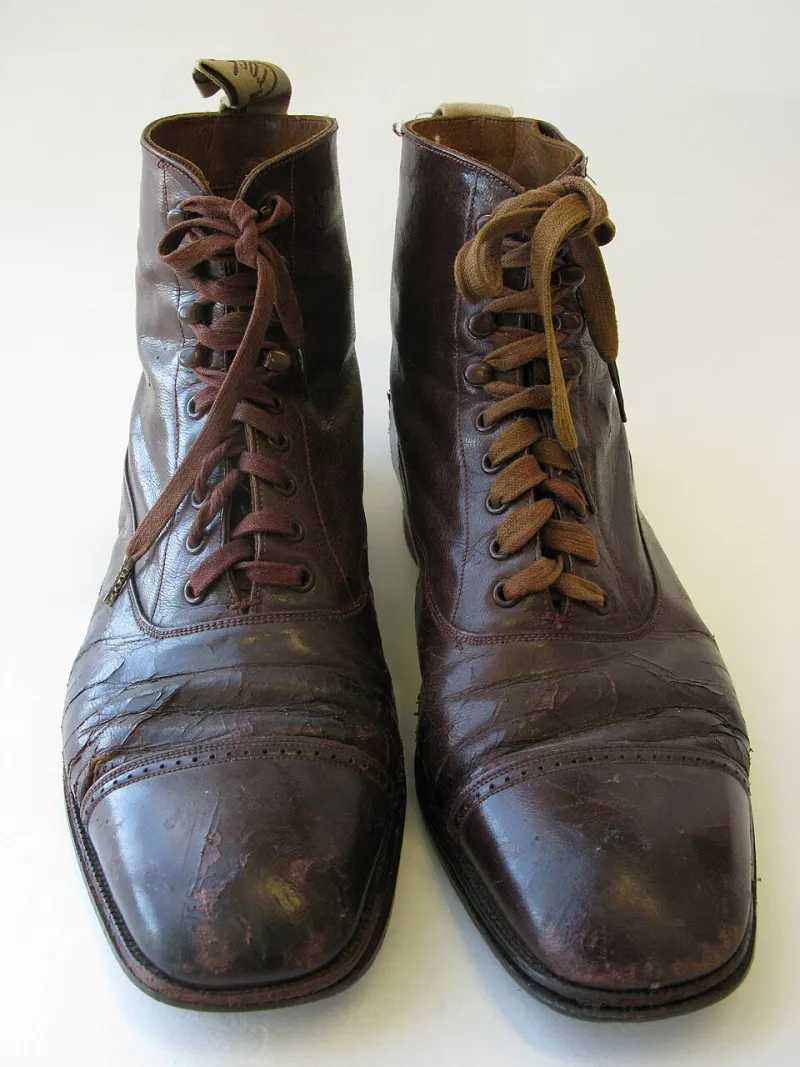
Photo: Crockett & Jones, CC BY 4.0, via Wikimedia Commons
Oxford in December is less a city of weather than a city of surface. The High after rain holds a low sheen that photographs beautifully and ruins leather quietly. Christ Church Meadow turns to a soft brown sponge. Broad Street's setts retain water in their joints and release it, without warning, onto the unprepared ankle. To dress well here in winter is not a matter of owning waterproof clothing; it is a matter of accepting that the ground is against you, and planning accordingly.
Most wardrobes fail in winter for a single reason: too few shoes, worn too often. A pair absorbs moisture on Monday, is worn again on Tuesday, and by Friday has taken on a permanent crease and a dull, tired bloom that no amount of polish will lift. The remedy is neither expensive nor complicated. It is arithmetic.
The Case for Three, Not One
A working rotation needs three pairs, each with a distinct job. Not three versions of the same shoe, which is merely a collection, but three roles: the formal shoe that flatters a suit; the boot that meets weather head-on; and the quiet, comfortable pair that occupies the ground between them. Alternated properly, each pair rests for two days between outings, which is ample time for lining and insole to dry and for shape to return.
This is the whole discipline. Everything else — cream, wax, trees, a decent cobbler — is maintenance of a system that already works.
Pair One: The Leather-Soled Brogue, Made Honest
Begin with Oxford's most useful shoe: a goodyear-welted brogue or derby in a firm, oiled calf. A leather sole is not a waterproof sole, and it is a mistake to pretend otherwise. It is, however, a sole that can be treated. A thin application of dubbin or a wax-based dressing worked into the welt and the sole edge — not the upper alone — will persuade water to run rather than soak, and will darken the leather agreeably in the process.
The brogue's advantage in this city is that it looks correct everywhere it is likely to be taken: a lecture room, a lunch, a college hall, a shop on the Turl. Its disadvantage is that it is the pair you will be tempted to wear every day. Resist. Two outings a week is generous; three is a habit that ends in a cracked sole and a January repair bill.
Pair Two: The Commando-Soled Boot
Here the argument is not aesthetic but structural. A studded rubber sole — Dainite or its equivalents — grips wet stone in a way that no leather sole ever will, and a boot with a storm welt and a bellows tongue will keep out the water that collects at the ankle on a walk along the towpath or across Port Meadow after a week of rain.
Choose a boot that is quiet in colour and unremarkable in shape: a plain toe, a short shaft, a dark brown or near-black grain. It should read as a shoe that happens to be taller, not as equipment. Worn with flannel trousers and a wool overcoat, it is perfectly at home on a winter afternoon; worn with a suit in the evening, it is not, and should not be asked to be.
Pair Three: The Quiet Rubber Sole
Between the two sits the pair that does the most unglamorous work: a rubber-soled derby, walking shoe or a suede chukka treated against water. This is the pair for the days of uncertain plans — a morning's errands, a long walk to a meeting, the possibility of standing about in a cold courtyard for twenty minutes longer than expected. It should be the most comfortable shoe you own and the least interesting, and it will be worn more than either of the others.
Suede is not disqualifying, provided it is treated before it is worn rather than after it is marked. A proprietary protector, reapplied through the season, will see suede through a wet November more reliably than most men expect. What suede will not survive is being worn wet on consecutive days, which returns us to the arithmetic.
The Discipline of Rest
Return each pair to a cedar or untreated wooden tree the moment it comes off. Wood draws moisture from the lining overnight in a way that newspaper, for all its reputation, only partly manages. Never dry shoes on a radiator; the leather will stiffen and crack at the flex point, and the sole will part from the welt. A dry, airy room at ordinary temperature is correct and costs nothing.
Keep a record, mentally or otherwise, of which pair was worn when. Men who claim not to need this are usually the men whose shoes wear out in nine months.
Weatherproofing Without Ruining
The temptation in a wet climate is to over-treat. Wax applied thickly will sit on the surface and gather dust; dubbin applied to a polished calf will dull it permanently. Use little and often. Clean off the mud with a damp cloth and let the shoe dry fully before any cream goes near it — cream on damp leather seals in the moisture that causes cracking. Polish to a modest shine, not a mirror, for winter.
When to Resole
Watch the welt stitching and the sole edge. A leather sole worn through to the midsole is a resole; a sole worn through to the upper is a replacement. The former costs a fraction of the latter and preserves the shape that took months to mould to your foot. A studded rubber sole, once worn flat at the heel, can be replaced on a welted boot in a week. In a city with several competent repairers, there is no reason for a good shoe to be discarded because of its outsole.
The Compromise That Survives
Composure in a wet Oxford winter is not achieved by the best pair of shoes in the wardrobe. It is achieved by the ordinary pair that is dry, brushed and holding its shape on the day it is needed. Buy fewer. Rotate them. Rest them. The pavement will do what it does regardless.