Stone-Grey Mornings: A Practical Audit of Oxford Shoes for Wet Weather
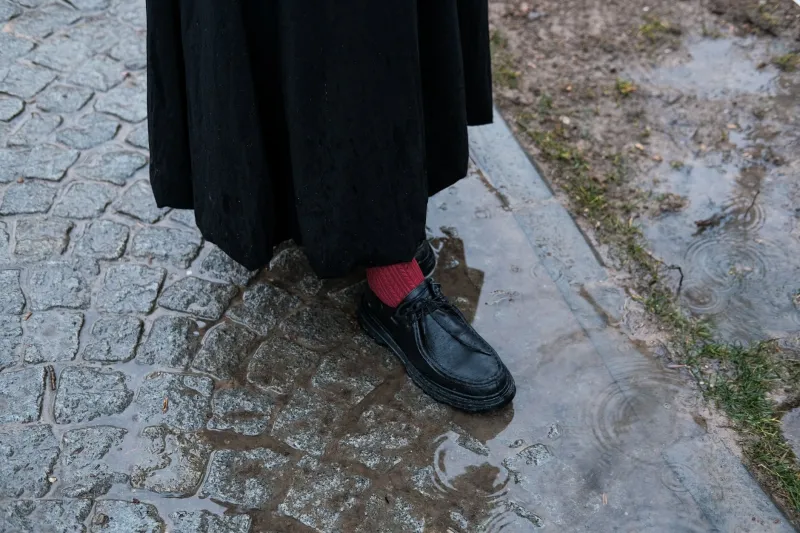
The Pavement Test
Oxford is beautiful in rain, but its pavements are not forgiving. Between uneven stone, slick flagstones and the long walk from the station, a polished leather sole can turn a morning into a balancing act. The Oxford shoe—properly made, properly maintained—can handle it. The mistake is to treat it as a delicate object. In 2026, the best pairs are the ones that combine a clean line with a sole that grips.
This is not a guide to hiking footwear. It is an audit for anyone who wants to wear Oxford-inspired tailoring through autumn and winter without ruining the shoes or the look.
Sole Choices: Where the Shoe Meets the Street
Leather soles are the traditional choice and still the most elegant. They are also the least practical in wet weather. If you live in a city and walk regularly, choose a rubber sole or a leather sole with a thin rubber topy. A Dainite studded sole is a good middle ground: it grips, it looks tidy, and it does not weigh down the shoe. A full commando sole is too aggressive for most tailoring, but it can work on a country brogue.
The key is not to compromise the silhouette. A chunky sole under a slim Oxford looks wrong; a low-profile rubber sole under a cap-toe looks right. If you want the elegance of leather with the security of rubber, ask a cobbler to add a topy before the first wear.
Construction: Spend on the Welt
Goodyear welted construction is the benchmark for a reason. It allows the sole to be replaced, which extends the life of the shoe by years. Blake stitching is slimmer and more flexible, but it offers less protection from water and is harder to resole. Cemented shoes—where the sole is glued—are the ones to avoid if you want longevity. They are fine at a low price, but they will not survive repeated wet mornings.
For a first pair, spend on a Goodyear welted Oxford in black or dark brown calf. For a second pair, consider a grain leather or a suede that has been treated for weather. Suede is more resilient than its reputation suggests, provided it is brushed and protected.
Heels, Repairs and the Long Game
The heel is the first part to wear. A stacked leather heel with a rubber top piece is standard; replace the top piece before it wears into the leather. A good cobbler can do this quickly and cheaply. The same applies to the sole: do not wait until there is a hole. A thin sole can be rebuilt; a neglected one cannot.
Keep cedar shoe trees in the shoes after wear, and rotate pairs. Wet shoes should dry naturally, away from radiators. Stuff them with newspaper if they are soaked, and let them rest for a day. This is not fussiness; it is basic maintenance.
Weatherproofing Without Ruining the Finish
Use a wax-based polish for calf leather and a suede protector for suede. Avoid silicone sprays, which can darken leather and leave a residue. In winter, a neutral cream polish will condition the leather and help it resist water. Reapply every few weeks, and buff with a horsehair brush. For salt stains, a weak vinegar solution and a clean cloth will lift them; do not scrub.
The Styles That Pair Well
A plain cap-toe Oxford in black is the most versatile. Wear it with grey flannel trousers, a navy overcoat and a cashmere scarf. A brogue Oxford in dark brown or oxblood works with tweed, corduroy and heavier wool. A wholecut is smarter and less forgiving; keep it for evenings and dry days. For wet weather, a Derby is often more comfortable because of its open lacing, but the Oxford remains the sharper choice.
The Verdict: Spend and Save
Spend on: Goodyear welted construction, a rubber or topied sole, and a plain calf leather Oxford in black or dark brown. Spend on repairs, too—a resole is cheaper than a new pair. Save on: trend colours, excessive broguing, and any shoe that cannot be resoled. Save on a second pair in suede only if you will maintain it; otherwise, put the money into the first pair.
At Jordell Oxford, the view is simple: buy the pair you can repair, and repair it well. A well-chosen Oxford shoe is not a fair-weather friend. With the right sole, a little maintenance and a cobbler you trust, it will carry you through the stone-grey mornings and the long evenings that follow.